Leather bags rarely crack without warning. The surface first feels dry, looks dull, or develops pale lines near folded edges. Learning How to prevent leather bags from cracking begins with understanding leather as treated animal hide, not ordinary fabric. Heat, low humidity, body oils, and repeated bending slowly remove its flexibility. Even a premium bag can fail when stored beside a radiator or left in a hot car.
David Mesquita, owner of Leather Spa in New York, describes the principle simply: “Leather is a skin, and it needs to breathe.” His observation supports a practical care routine. Clean away dust with a soft, dry cloth. Apply a suitable leather conditioner sparingly. Allow the bag to absorb it overnight. Then buff the surface gently. Too much product can leave a greasy film and attract dirt. That mistake is easy to make.
This guide will examine storage, cleaning, conditioning, and daily handling. It will also explain why different finishes require different care. Smooth leather may tolerate a richer conditioner. Suede and unfinished leather need far more caution. Always test products on a hidden area first. Small steps matter.
There is no flawless routine. Some advice online is too general. A bag used daily may need more attention than one stored in a closet. Humidity also changes the answer. The goal is not to make leather look wet or unnaturally shiny. The goal is to preserve softness, reduce stress at creases, and notice damage before cracking becomes permanent.
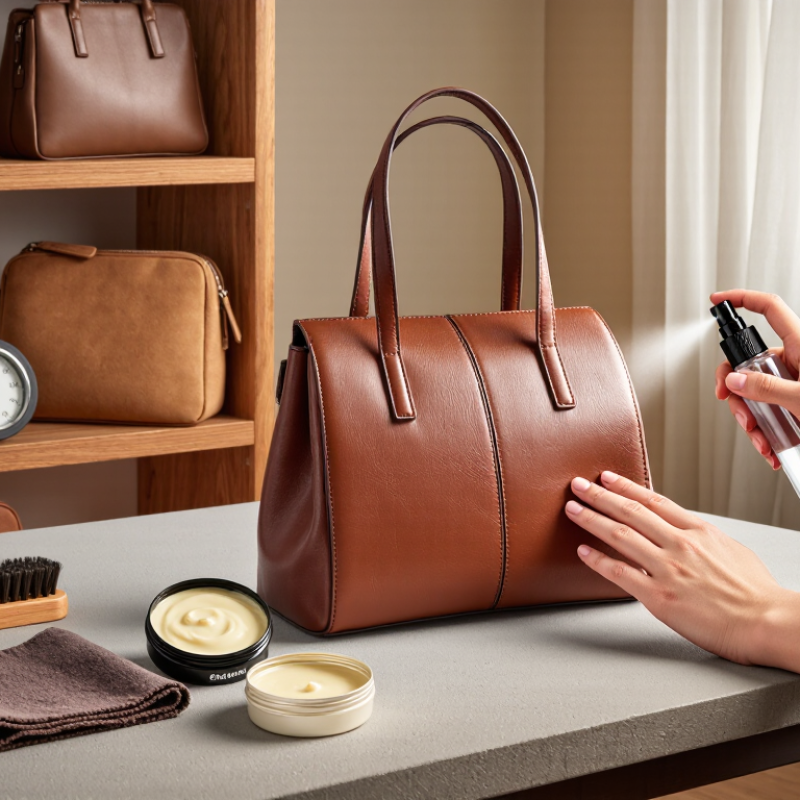
Leather cracking usually begins with a wrong care assumption: treating every hide like smooth, finished leather. Identify the leather first. Full-grain leather shows natural pores and benefits from light conditioning. Corrected-grain leather has a surface coating, so heavy oils may soften or cloud it. Suede and nubuck need dry brushing, not ordinary leather cream. Split leather can feel flexible but still crack under heat and repeated bending.
Check the care label, then inspect the edge and reverse side. A smooth, uniform surface may contain polyurethane. A visible nap suggests suede or nubuck. Test any conditioner inside a handle loop. Wait 24 hours. Colour change is possible. I have seen “universal” products leave dark patches, especially on pale leather. Patch testing feels slow, but it prevents a larger repair.
Storage matters as much as product choice. The Canadian Conservation Institute commonly recommends stable relative humidity near 45–55% for organic collections. ASTM D618 uses 23°C and 50% relative humidity as controlled conditioning points, although it is not a leather-care rule. Avoid radiators, sealed plastic bags, and direct sunlight. Wipe surface dust with a soft, barely damp cloth. Apply a thin conditioner only when the leather feels dry, never on a fixed schedule. Over-conditioning can weaken finishes and attract dirt. For suede, use a suede brush and keep liquids away. Temperature changes are often overlooked. They should not be.
How to Prevent Leather Bags From Cracking Easily?
Before applying any conditioner, clean the bag gently. Dust and grit can act like fine sandpaper when rubbed into leather. I use a soft, dry cloth to remove surface particles, especially around seams and handles. For light marks, I slightly dampen the cloth with clean water. The leather should never become wet or soaked.
Be gentle. Always.
If the bag needs deeper cleaning, choose a mild leather cleaner suitable for its finish. Test it on a hidden area first, because color and texture can react unexpectedly. Wipe with small, slow movements rather than scrubbing. Pay attention to corners, where dirt often gathers. After cleaning, leave the bag in a cool, ventilated place until completely dry. Avoid radiators, hair dryers, and strong sunlight, which can pull moisture from the leather.
I learned this the hard way.
Once, I conditioned a bag while a thin layer of dust remained on the surface. The leather looked shiny, but the finish felt uneven afterward. That mistake changed my routine. I now apply a small amount of conditioner with a clean cloth, using light circular motions. Too much product can soften leather excessively and leave it sticky. Conditioning every few months may help, but climate, handling, and leather type matter. Care should be gradual, not automatic.
Leather loses moisture through heat, dry air, and repeated handling. Regular conditioning helps preserve its flexibility and reduces surface cracking. Use a conditioner made for the bag’s leather type. Smooth leather needs different care from suede or heavily coated leather.
Wipe away dust with a soft, dry cloth before applying anything. Put a small amount of conditioner on a hidden area first. Then spread a thin, even layer with a clean cloth. Do not soak it. Let the leather rest for several hours, then gently buff the surface.
I once applied too much conditioner, and the bag felt greasy for days. Less product works better.
Conditioning every two to three months suits many bags, but climate and use can change that schedule. Bags carried daily in dry weather may need attention more often. Keep them away from radiators, strong sunlight, and damp storage areas. Stuff the interior with plain paper to maintain its shape.
Small steps matter. I still check the leather before each treatment because fixed schedules are not always reliable.
If the surface already shows deep cracks, conditioning may soften it but cannot fully restore the damaged fibers.
Leather can crack when heat, sunlight, water, or dry air removes its natural flexibility. In my experience, prevention works better than heavy repairs. Store the bag in a cool room, away from radiators, heaters, and hot car interiors. Keep it shaded. Direct sunlight can fade the surface and dry the leather unevenly. A breathable dust bag helps, while plastic covers may trap moisture against the material.
Water needs quick attention. If rain touches the bag, gently blot it with a clean, soft cloth. Do not rub the wet area. Let it dry naturally at room temperature. Never use a hair dryer, radiator, or heated cabinet. Fast drying can make the surface stiff and brittle.
I once dried a damp leather wallet beside a heater, and its edges hardened within hours. That shortcut was a mistake.
Dry indoor air also matters, especially during winter. Apply a suitable leather conditioner sparingly, following the care guidance for the leather type. Test it on a hidden area first. Too much product can leave dark, greasy patches. Keep the bag lightly filled with clean paper to preserve its shape, but avoid overstuffing. Check it every few weeks. If the leather feels unusually dry or develops fine lines, adjust its storage conditions before the cracks deepen.
Proper storage is one of the simplest ways to prevent leather bags from cracking or losing their shape. Before storing one, empty every pocket and remove dust with a soft, dry cloth. Moisture and dirt can slowly weaken the surface. Let the bag dry naturally if it has been exposed to rain. Never use a hair dryer or place it near a heater.
Keep the bag in a cool, dry, and shaded area. Direct sunlight can fade leather and make it brittle. Avoid damp closets, sealed plastic boxes, and hot car trunks. Leather needs limited airflow. A breathable cotton dust bag works better than plastic. Leave a little space around the bag, too. Crowded shelves can press sharp folds into the leather.
Fill the interior gently with acid-free paper or a clean cotton shirt. This helps maintain the original shape without stretching the leather. Store the bag upright when possible, but do not hang heavy bags by thin straps. Their weight may deform the handles. I once stored a structured bag under several sweaters, and the top edge stayed bent for weeks. That mistake changed my routine. I now check stored bags every few months, wipe away dust, and reshape them carefully. Still, I sometimes overfill the interior, so regular inspection remains necessary.
Store the Bag Properly to Prevent Cracks and Deformation
Proper storage helps leather retain its natural oils and shape. Keep bags in a stable environment of approximately 18–22°C and 45–55% relative humidity, protect them from direct light, and leave enough space between bags to prevent pressure-related deformation. The values shown are practical conservation-oriented storage targets; specific leather finishes may require different care.
Dust and grit can rub against leather like fine sandpaper. Clean the surface first. Be gentle.
Use a soft, dry cloth around seams, handles, and corners. For light marks, slightly dampen it with clean water.
It should not become soaked. Use minimal moisture, then let the bag dry naturally in a cool, ventilated place.
Choose a mild cleaner suitable for the leather finish. Test it on a hidden area before cleaning visible sections.
Scrubbing can disturb the finish and create uneven texture. Use small, slow movements instead. I learned this late.
Apply a small amount with a clean cloth. Use light circular motions. Too much may leave the leather soft and sticky.
Keep it in a cool, dry, shaded area with limited airflow. Avoid damp closets, hot car trunks, and strong sunlight.
Plastic can trap moisture. A breathable cotton dust bag is usually better. Leave space around the bag.
Empty every pocket and fill the interior gently with acid-free paper or a clean cotton shirt. Do not overfill it.
Check it every few months for dust, pressure marks, and shape changes. I sometimes overfill bags, so inspection still matters.
Learning how to prevent leather bags from cracking starts with understanding the type of leather and its specific care needs. Before applying any conditioner, gently remove dust and dirt with a soft, dry or slightly damp cloth, avoiding harsh cleaners and excessive moisture. Once the surface is clean, use a suitable leather conditioner in a small amount to restore moisture and keep the material flexible. Regular conditioning can help prevent dryness, but over-conditioning may leave the bag greasy or weaken its finish.
To further understand how to prevent leather bags from cracking, protect the bag from direct sunlight, strong heat, water, and overly dry air. Sudden temperature changes and prolonged exposure to heaters can remove essential moisture from leather. When the bag is not in use, store it in a breathable dust bag, keep its shape with clean, soft filling, and place it in a cool, dry area. Proper cleaning, moisturizing, protection, and storage together can significantly extend the bag’s appearance and durability.

Minyan Bag